By Omid @ Glass go Llc, Licensed Technician · · Updated · 13 min read
Custom Framed Mirrors: Styles, Materials & Glass
Custom framed mirrors start with the glass: thickness, edge finish, and safety backing prepared by certified technicians before any frame is built. Learn how.
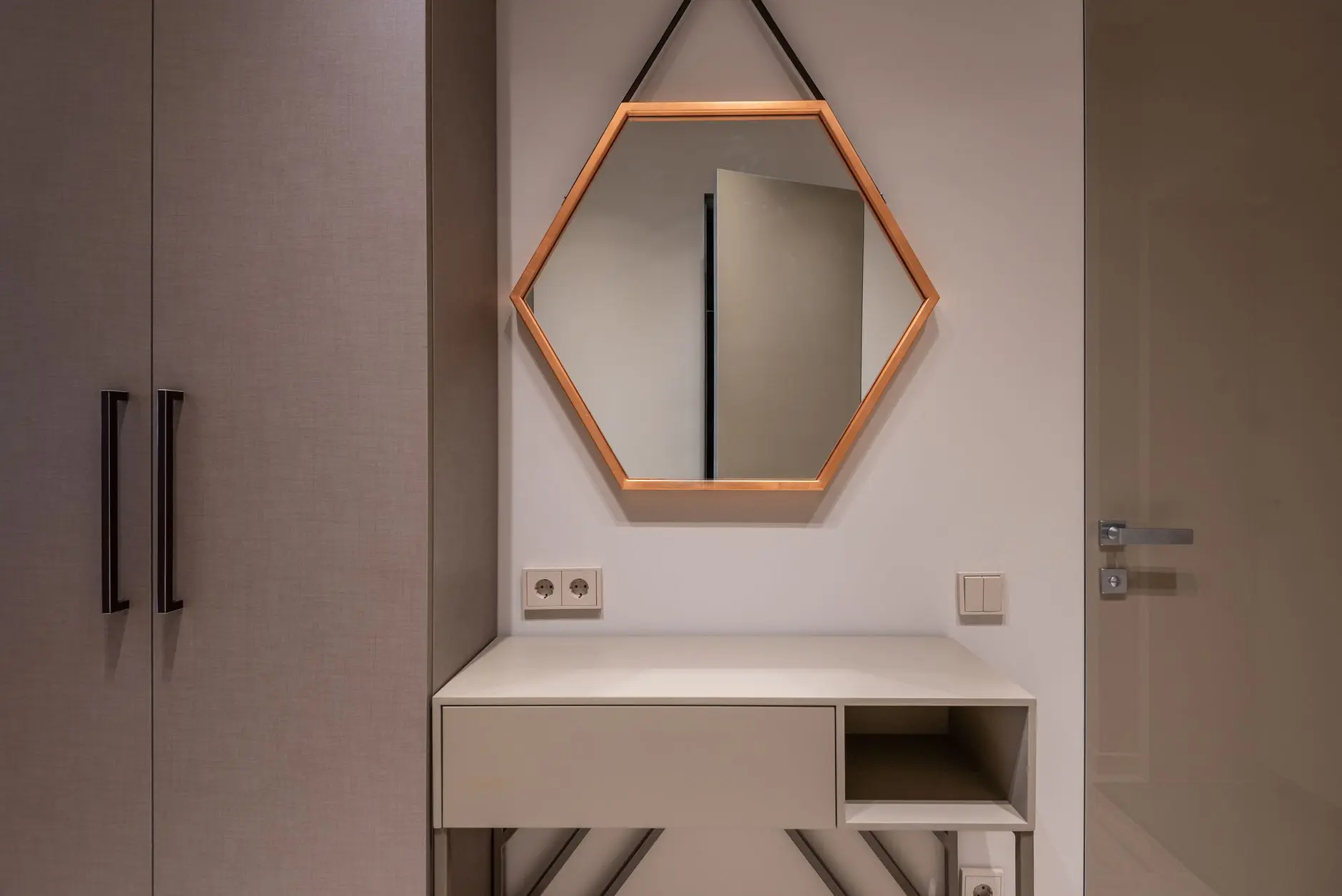
A custom framed mirror starts with the glass, not the frame. The thickness, edge finish, and safety backing are prepared by certified technicians before any molding is cut, so the final piece fits your space exactly and lasts. If you are shopping for custom framed mirrors in Dallas, the single most important decision is the glass spec because it determines how the mirror hangs, reflects, and holds up over time.
You have probably noticed that off-the-shelf mirrors never quite match the vanity or the wall you have in mind. A true custom piece solves that completely and costs less than most people assume once you understand what moves the price.
Key Takeaways- Custom framed mirrors are cut to your exact dimensions with a professionally prepared edge, then fitted with a frame you choose for style and environment.- Frame material matters most in humid rooms: a sealed hardwood or powder-coated metal outlasts raw wood or MDF in a Dallas bathroom.- Glass thickness for a full-length mirror should be 1/4 inch for rigidity; a vanity mirror can work at 3/16 inch with a safety backing.- The same certified technicians who cut and edge glass tabletops and shelves at GlassGo prepare every custom mirror, so the edge work is clean enough to leave unframed if you prefer a frameless look later.
I am Omid, the manager at GlassGo and a licensed technician. Over 16 years of cutting and installing glass across the Dallas metro, I have learned that a mirror project lives or dies on the glass prep. Get that right, and the frame is just a style decision.
What Makes a Mirror 'Custom Framed'?

A custom framed mirror is a piece of glass cut to your exact measurements, with its edges ground and polished to a specific profile, then fitted into a frame you select for the room it will live in. It is not a pre-boxed size with a snap-on border. The difference is in the glass preparation: a stock mirror leaves the factory with a raw, sharp edge that a plastic frame hides. A true custom piece starts with the glass specification.
At GlassGo, certified auto glass technicians handle the same precision cutting and edging on residential mirror projects that they use on vehicle glass. The steps are the same whether the final product is a custom mirror, a glass tabletop. A shelf: measure to the sixteenth of an inch, score and break clean, then grind the edge to a flat polish or a bevel. Only after the glass passes an edge inspection does any frame work begin. That order matters because a poorly prepared edge will chip inside a frame over time, and once the frame is on, you cannot fix it without starting over.
The Three Decisions That Define a Custom Framed Mirror
- Dimensions. You specify the exact width and height, not a range. This is what lets the mirror fill a wall section or sit precisely between two sconces.
- Edge profile. A flat polish gives a clean, modern line. A bevel adds an angled border that catches light. The edge must be finished before framing because the frame sits against it.
- Frame material and finish. Wood, metal, or a frameless-look channel. The material choice drives both the look and how the mirror holds up in a steamy bathroom.
Frame Material Options Compared

The frame does two jobs: it finishes the mirror visually and it protects the glass edge from bumps and moisture. The material you pick changes both. Here is how the most common options stack up for custom framed mirrors in a residential setting.
Material | Best For | Moisture Resistance | Weight | Typical Look |
|---|---|---|---|---|
Solid hardwood (oak, maple, walnut) | Entryways, living rooms, dry powder rooms | Moderate - needs a sealed finish | Heavy | Warm, traditional, high-end |
Engineered wood with a moisture-sealed wrap | Bathrooms, laundry rooms | High - the wrap blocks vapor | Medium | Painted or wood-grain, consistent color |
Powder-coated aluminum | Full bathrooms, pool-house mirrors | Excellent - will not rust or swell | Light | Slim, modern, matte or satin colors |
Stainless steel or brushed nickel | Vanities matched to plumbing fixtures | Excellent | Medium | Clean, commercial, reflective |
Frameless-look channel (glass sits in a slim metal U-channel) | Minimalist bathrooms, gym mirrors | Excellent - the channel is metal | Light | Nearly invisible, lets the glass dominate |
GlassGo works with all of these materials on residential projects, including the same commercial-grade aluminum channel used on storefront and commercial glass installs. The channel option is popular for Dallas homeowners who want the clean edge of a frameless mirror but still need the glass protected at the perimeter. As a licensed and insured shop, we stand behind every frame choice with our lifetime workmanship warranty.
Which Frames Hold Up in Humid Bathrooms
A bathroom mirror lives in the harshest environment in the house: daily steam, splashback from the sink, and cleaning chemicals. The wrong frame material will swell, delaminate, or develop black spots at the joints within two years.
Pros of a moisture-rated frame:
- A powder-coated aluminum frame or a sealed engineered-wood frame will not warp, even on an exterior bathroom wall that sweats during a Texas cold snap.
- The finish stays uniform. You can clean it with a standard glass cleaner without worrying about stripping a wax coat.
- The mirror stays square. When a wood frame moves, it can pinch the glass and cause a stress crack at the corner.
Cons to watch for:
- A true solid-wood frame in a full bath needs a marine-grade spar varnish and regular re-sealing. Most homeowners skip the maintenance, and the frame fails at the bottom corners first.
- MDF or particle-board frames with a paper wrap look fine on day one but will bubble the first summer if the bathroom fan is weak.
For a Dallas bathroom that sees heavy use, we recommend a powder-coated aluminum frame or a sealed engineered-wood frame. The same principle applies to shower enclosures: the glass edge and the frame material have to be chosen for constant moisture. GlassGo uses the same moisture-rated channel and sealant methods on custom mirrors that we use on frameless shower enclosures, so the install is tested in wet conditions.
The Glass Side of the Equation: Thickness, Edging and Safety Backing
Before any frame is built, the glass itself goes through three preparation steps at the cutting bench. This is where a custom mirror earns its longevity, and it is the part most shops skip in their marketing because it happens before the product looks like anything.
- Thickness. Most custom framed mirrors use 3/16-inch or 1/4-inch glass. A 3/16-inch mirror is fine for a vanity up to about four feet tall. For a full-length mirror or anything wider than three feet, 1/4-inch glass is the safer choice because it resists flexing. Flex is what eventually cracks the silver backing.
- Edge treatment. A raw cut edge is sharp and full of micro-fractures. A certified technician grinds the edge to a flat polish (a smooth, square profile) or a bevel (an angled cut, usually 1/2 inch to 1 inch wide, that catches light). The edge must be finished before framing because the frame channel or adhesive sits against it. An unfinished edge will chip inside the frame over time and the damage spreads inward.
- Safety backing. Building code requires a safety backing on any mirror installed in a bathroom or on a door. The backing is a clear film applied to the rear of the glass. If the mirror breaks, the film holds the pieces together instead of letting them shatter onto the floor.
A typical process scenario from our shop: a technician pulls a full sheet of 1/4-inch mirror glass, scores it to the ordered dimensions, and snaps it clean. The edge grinder then runs a diamond wheel along all four sides to create a flat polish. The same wheel and technique are used on glass tabletops and shelves, so the technician has done this thousands of times. After polishing, the edge is inspected under a light for any chips. Only a clean edge moves on to framing. If the customer later decides to remove the frame and go frameless, the edge is already finished and safe to expose. This is the same standard we apply to every residential window glass repair we do across Dallas.
Framed vs Frameless: Which Look Is Right for Your Space?
The choice between a framed and a frameless mirror is really about the room's architecture and how much visual weight you want on the wall.
Framed mirror pros:
- The frame defines the mirror as a piece of furniture. In an entryway or a traditional living room, a framed mirror anchors the wall.
- The frame protects the glass edge from bumps, which matters in a hallway or a kid's bathroom.
- You can match the frame finish to existing hardware, baseboards, or cabinet pulls for a built-in look.
Framed mirror cons:
- A thick frame can make a small bathroom feel smaller.
- If the frame material is not moisture-rated, you will have a maintenance problem.
Frameless mirror pros:
- A frameless mirror with a polished edge disappears into the wall. It makes a small powder room feel twice as large.
- There is no frame to clean or maintain.
- The look is modern and works with any hardware finish.
Frameless mirror cons:
- The edge is exposed, so the glass must be thicker (usually 1/4 inch minimum) and the edge polish must be flawless. A cheap edge job shows every ripple.
- In a high-traffic hallway, the exposed edge is more vulnerable to chips from a doorknob or a passing vacuum.
For a Dallas home with an open floor plan, a framed mirror in the entryway and a frameless mirror in the guest bath is a common combination. GlassGo backs every installation with a lifetime workmanship warranty against leaks and defects, whether the mirror is framed or frameless, for as long as you own the home.
Popular Custom Mirror Projects We See in Dallas Homes
Over 16 years of residential glass work in the Dallas area, certain custom mirror projects come through the shop again and again. Each one solves a specific problem that a stock mirror cannot.
- Entryway and full-length mirrors. A tall, narrow mirror framed in stained oak fills the wall next to the front door and gives you a last look before you walk out. The frame finish is usually matched to the baseboard profile and stain color.
- Vanity and bathroom mirrors. The most common request is a mirror cut to the exact width of a double vanity, framed in brushed nickel to match the faucets. A beveled edge adds a detail line that picks up the vanity light.
- Gym and dance mirrors. Wall-to-wall mirrors in a home gym are usually frameless with a flat-polish edge, mounted with hidden clips. The glass is 1/4 inch thick to stay rigid across a wide span.
Jhovany Gonzalez, a GlassGo customer, described his experience after a sunroof glass replacement on his vehicle: "I don't often leave reviews, but Glass Go LLC earned this one. After having the sunroof glass replaced on my 2019 VW Jetta, I noticed a wind noise issue and was concerned about the installation. I reached out to the owner, and instead of avoiding the problem, he personally called me, took the time to explain everything, listened to my concerns, and stayed in communication throughout the entire process." The same precision and accountability that Jhovany saw on his auto glass carries over to every residential custom mirror project. The technician who cuts and edges a mirror is the same technician who calibrates a windshield, so the standard for a clean, chip-free edge is the same. If you are searching for custom mirrors near me in Dallas, that local, hands-on consistency is what you get with us.
How Ordering a Custom Framed Mirror Works
The process is straightforward, and most projects move from measurement to install in about two weeks. Here is what to expect.
- Measure the space. You provide the rough dimensions, or we send a technician to your home for a site measure. A site measure is included for most Dallas metro projects and is the best way to catch uneven walls or obstructions.
- Choose the glass spec. We walk you through thickness, edge profile, and safety backing based on where the mirror will hang. This is the conversation that prevents a mirror from being too thin for its size.
- Select the frame. You pick the material, profile width, and finish. We can match an existing paint color or hardware finish from a sample you provide.
- Fabrication. The glass is cut, edged, and inspected at our shop. The frame is cut and joined. A licensed and insured technician performs every step of the fabrication and handles the glass from raw sheet to finished product.
- Installation. We mount the mirror with the correct hardware for your wall type, level it, and clean the glass. You get a final walk-through to confirm the edge and frame are perfect.
Every custom mirror is backed by our lifetime workmanship warranty. If the frame joint opens or the silver backing fails due to a defect in our work, we fix or replace it for as long as you own the home.
Frequently asked questions
How long does it take to get a custom framed mirror made?
Most custom framed mirrors are ready for install within two weeks from the date we confirm the measurements and frame selection. The fabrication itself takes a few days, but frame material lead time and shop scheduling account for the rest. We will give you a firm install date when you place the order so you can plan around it.
Do you come to me for measurements and installation?
Yes. GlassGo provides mobile service across the Dallas metro, and a site measure is included for most residential custom mirror projects. A technician comes to your home, measures the wall, checks for level and obstructions, and discusses glass and frame options with you on the spot.
What is the best frame material for a bathroom mirror?
A powder-coated aluminum frame or a sealed engineered-wood frame is the best choice for a bathroom because both materials resist moisture and will not warp or corrode from steam and splashback. Avoid raw wood or MDF with a paper wrap unless you are prepared to reseal the frame regularly.
Is there a warranty on custom mirrors?
Every custom mirror GlassGo installs is covered by a lifetime workmanship warranty against leaks, frame defects, and silver-backing failure for as long as you own the home. If a problem arises from our work, we repair or replace the mirror at no charge.
Can you match a custom mirror frame to my existing hardware?
Yes. We can match a frame finish to a paint chip, a stain sample, or a plumbing-fixture finish you provide. For a true metal match, we order the frame in the same manufacturer finish as your faucets or cabinet pulls.
What thickness of glass should I choose for a full-length mirror?
Choose 1/4-inch glass for a full-length mirror. The added thickness keeps the glass rigid across a tall span and prevents flexing that can eventually crack the silver backing. For a vanity mirror under four feet tall, 3/16-inch glass with a safety backing is usually sufficient.
Your Custom Mirror, Built from the Glass Up
A custom framed mirror is a glass project first and a frame project second. The glass thickness, edge finish, and safety backing determine how the mirror looks on the wall and how long it stays flawless. When the glass is prepared correctly, the frame becomes a style choice rather than a cover-up for a rough edge.
For a Dallas homeowner, the right combination is usually a moisture-rated frame for bathrooms, a hardwood frame for entryways, and a frameless polished edge for gyms and modern powder rooms. The process from measurement to install takes about two weeks, and every piece carries a lifetime workmanship warranty.
Get a free quote on your custom framed mirrors project. Call GlassGo at (972) 408-6233 or request a quote online and a technician will walk you through glass specs, frame options, and an in-home measure.